Waste is one of the few ESG metrics that sits inside the business
Many sustainability indicators measure outcomes. Waste data can do something more useful: it can point towards the decisions that created those outcomes in the first place.
Every item that enters a waste stream has already travelled through the business.
Your Waste Contractor Is Already Part Of Your SHEQ Strategy
Waste reporting has become the baseline
A surprising number of sustainability reports follow exactly the same pattern. A PDF is generated. A sustainability dashboard is updated. The numbers are presented at a meeting. Everyone nods approvingly. The metrics are proudly included as colourful graphs in the company’s annual report.
And then? Nothing changes.
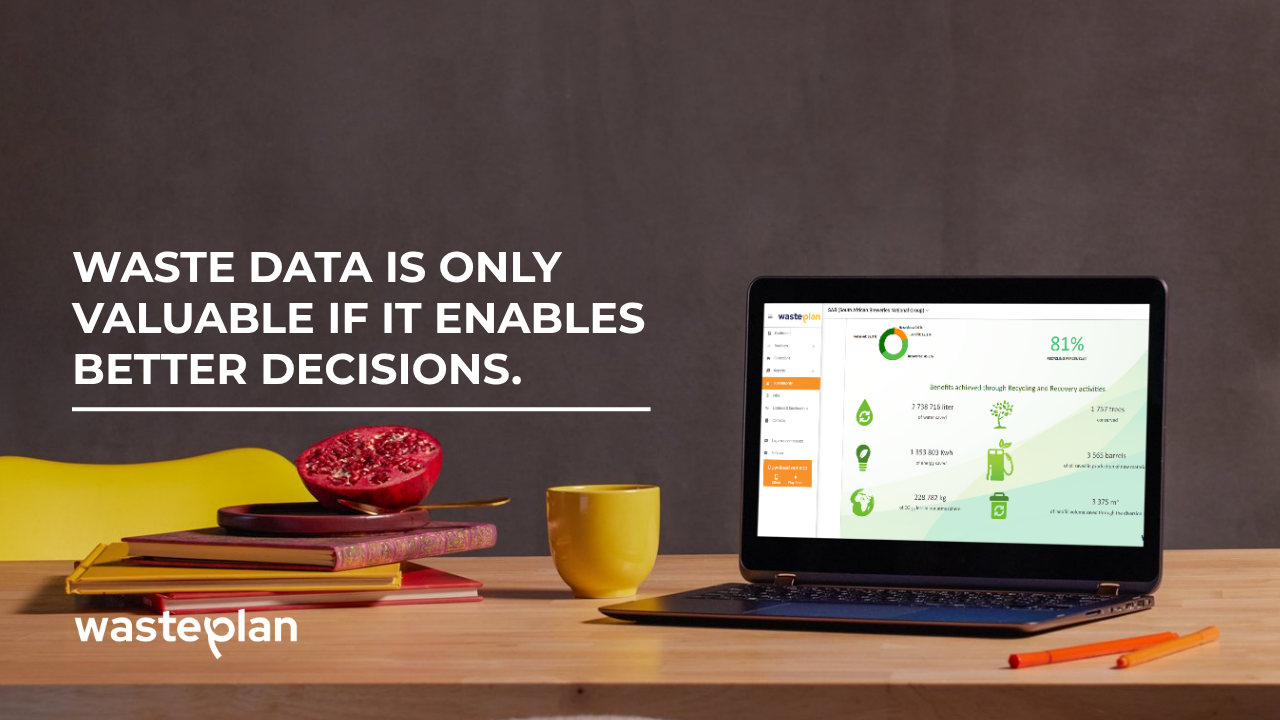
In many companies, waste reporting has never been more accurate. Landfill volumes, recycling rates, diversion performance and carbon impacts can all be measured with impressive precision.
The problem is that measurement and improvement are not the same thing.
For years, the sustainability challenge was visibility. Companies needed better data, stronger reporting systems and clearer environmental benchmarks. Today, most large businesses have achieved that. Stakeholders increasingly assume environmental, social, and governance (ESG) information will be available. What they want now, is evidence that the information is being used.
Waste is one of the few ESG metrics that sits inside the business
Many sustainability indicators measure outcomes. Waste data can do something more useful – it can point towards the decisions that created those outcomes in the first place.
Every item that enters a waste stream has already travelled through the business. It has been purchased, transported, stored, processed, consumed and discarded. That means waste data often reveals patterns that extend far beyond waste management itself. A spike in food waste may have more to do with forecasting than disposal. High contamination rates may indicate process failures, infrastructure constraints or training gaps. Rising transport costs may expose inefficiencies in collection models rather than problems with recycling.
This is what makes waste data so valuable – it does not simply measure environmental performance, it provides clues about how the company is operating.
However, it takes experience to identify which trends matter, insight to understand what is driving them, and organisational influence to turn those insights into better decisions.
This is where sustainability shifts from a reporting function to a management discipline.
The gap between reporting and action
Globally and in South Africa, ESG reporting is entering a more mature phase. The focus is shifting away from broad sustainability commitments towards evidence that companies are delivering measurable outcomes.
This shift is being driven from several directions at once:
- Investors are asking harder questions about how environmental initiatives contribute to long-term resilience and risk management.
- Customers increasingly expect suppliers to substantiate sustainability claims with credible data.
- Regulators and reporting frameworks are raising expectations around transparency, consistency and accountability.
For waste management, this creates an interesting challenge.
Most companies can show how much waste they generated, recycled or diverted from landfill. Fewer can clearly explain what they learned from that information, how it influenced operational decisions, and what changed as a result.
How ESG maturity is really measured
That distinction is becoming increasingly important:
- A company that reduces contamination rates through improved staff engagement can tell a more compelling story than one that simply reports contamination levels.
- A business that uses waste data to identify procurement inefficiencies demonstrates a level of organisational maturity that goes beyond compliance.
- A manufacturer that can show how waste insights contributed to lower costs, improved resource efficiency, or reduced environmental impact is providing evidence of active management rather than passive measurement.
That is increasingly where credibility comes from. Not from publishing more ESG data – but from showing a clear link between insight, action, and measurable progress.
At WastePlan, reporting is viewed as the beginning of that process. By translating waste data into operational insights, identifying opportunities for improvement and supporting credible ESG reporting, we help organisations move beyond measurement and focus on what ultimately matters: making better decisions.
Because the most valuable waste metric is not the one that looks impressive in a report. It is the one that changes the future.
Book your free waste audit and start saving today.