Making sustainability work within hospitality operations
A hotel has one primary goal: to create an experience that makes guests want to return. Everything else supports that goal. Occupancy, service standards, food and beverage, housekeeping, events and staffing all compete for management’s attention.
Waste management needs to fit into this reality.
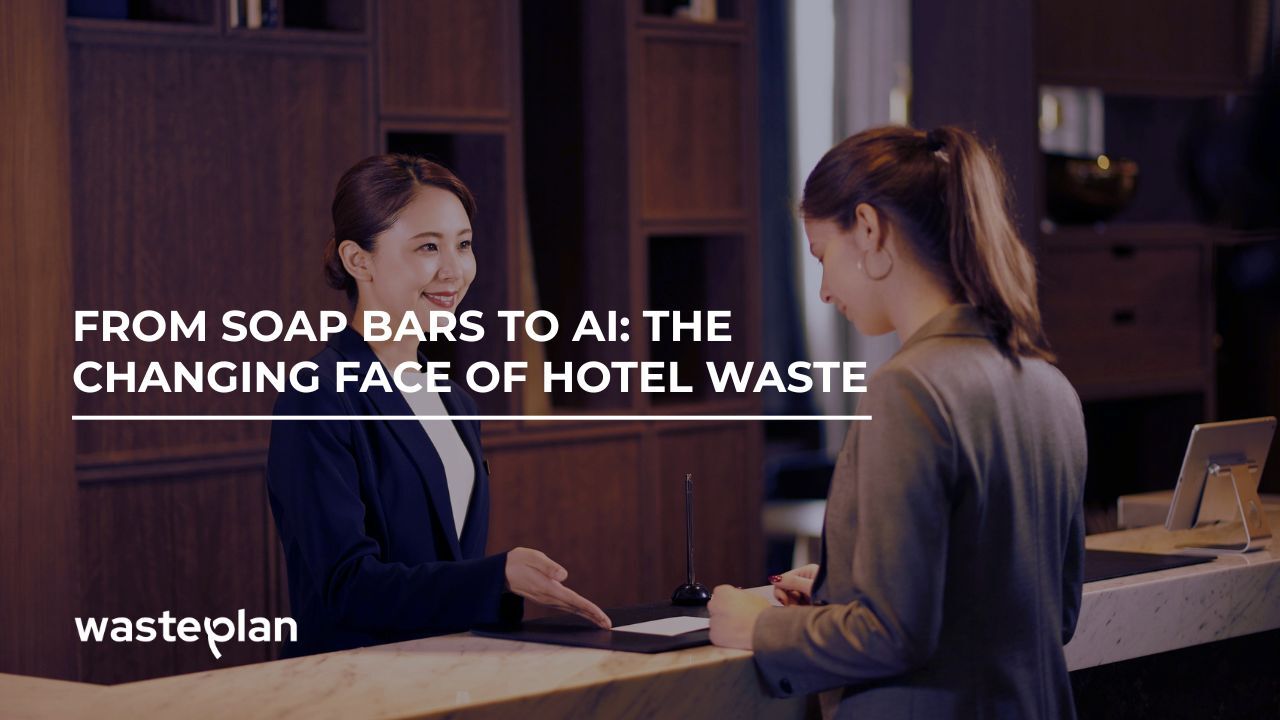
FROM SOAP BARS TO AI: THE CHANGING FACE OF HOTEL WASTE
Most hotels are built around abundance. The luxury experience is, in part, the experience of not having to think about scarcity: fresh towels whenever you want them, generous breakfast buffets, beautifully presented meals, individually packaged amenities, complimentary water and rooms maintained to immaculate standards.
Sustainability though, asks a different question: how do you deliver what is needed, without using more than is needed?
For hotels, this is not a simple equation. Guest expectations, operational demands and sustainability commitments all have to work together. The solution is not to make hospitality feel less generous, but to find smarter ways of delivering the same experience with less waste and better use of resources.
Making sustainability work within the operation
A hotel has one primary goal: to create an experience that makes guests want to return. Everything else supports that goal. Occupancy, service standards, food and beverage, housekeeping, events and staffing all compete for management’s attention.
Waste management needs to fit into this reality.
A guest should not have to think about where to put a coffee cup. A housekeeper should not have to wrestle with an impractical separation system. And hotel management should not have to spend its time navigating the complexities of waste treatment, recycling options and compliance.
The most effective systems are the ones that work naturally within the operation, while still creating measurable environmental and financial benefits.
One hotel, many waste streams
The challenge becomes more interesting when you look at what hotels actually generate.
Food and beverage operations produce food waste, glass, cans and packaging. Housekeeping generates plastics, paper and cardboard. Guest rooms bring their own mixture of materials. Then there are the less frequent but more substantial items: mattresses, furniture, appliances, textiles and electronic equipment.
Volumes can change dramatically, too. A conference can transform a hotel’s waste profile for a day. A fully booked restaurant can significantly increase food and packaging waste. Seasonal peaks can place very different demands on storage and collection.
This is where the practical details matter. Are collections aligned with actual volumes? Is there enough storage during peak periods? Are bins positioned where staff need them? Can materials be separated without creating additional work?
There is rarely one solution for everything. Food waste may require a different treatment route from glass or cardboard, while textiles, furniture, mattresses and e-waste may need specialist solutions. A waste audit can help identify where the most meaningful opportunities lie, from reducing waste at source to recovering more of what is already being discarded.
And sometimes the best waste management decision happens before anything reaches a bin. Procurement, packaging, single-use items, food purchasing and inventory management all influence what ultimately becomes waste.
What a bar of soap can teach us
Some waste streams may seem too small to matter. Until you multiply them across thousands of hotel rooms.
Take soap, for example. Most guests use only part of a bar before checking out, leaving a perfectly usable product that is nevertheless treated as waste. An alternative is to use refillable dispensers, but some hotels still prefer individual amenities because they form part of the guest experience.
The US-based organisation Clean the World has developed another option. Its Global Hospitality Recycling Program collects discarded hotel soap (as well as plastic shampoo and conditioner bottles). The soap bars are processed, sanitised and manufactured into new bars, which are distributed through NGOs such as The WASH Foundation.
The scale is remarkable. According to Clean the World, the programme now involves more than 8,599 hospitality partners, has diverted more than 14,515 tonnes of waste from landfill and distributed more than 100 million recycled soap bars since the programme began in 2009.
It is a useful reminder that a waste stream does not have to be large at an individual property to be worth solving.
And now AI is looking inside the kitchen bin
Food waste presents an even bigger opportunity.
Hotels have long had options for treating food waste, from composting to anaerobic digestion. What is changing is the ability to understand exactly what is being wasted before deciding how to manage it.
AI-enabled systems such as Winnow use cameras, scales and machine learning to identify food as it is discarded. The data can show chefs what is being wasted, in what quantities and at what cost.
The interesting part is what happens next. At Ashford Castle in Ireland, for example, chefs have used insights from the system to find new uses for food that would otherwise have been discarded. Surplus sourdough becomes crackers, croissants go into bread-and-butter pudding, carrot tops become pesto and beef trim can be incorporated into dishes such as bobotie spring rolls.
The technology is impressive, but the underlying principle is quite simple: better information can lead to better decisions.
You don’t need AI to make better decisions
Most hotels will not rush to install an AI system above every kitchen bin. Nor do they need to.
They already have valuable information: recycling collection records, occupancy data, operational patterns and waste management costs.
Bringing that information together can reveal useful questions. Are collections aligned with actual volumes? Which waste streams are driving costs? What does waste per occupied room reveal that a total monthly volume might hide? Where are contamination or handling problems occurring? Are materials being sent to the most appropriate treatment route?
For hotels working towards Zero Waste To Landfill (ZWTL), Green Star ratings or broader ESG commitments, this kind of insight can help turn a target into a practical plan.
The right solution will look different from one hotel to another. It may involve better source separation, changes to collection arrangements, alternative treatment options, new equipment or changes to procurement and infrastructure.
That is where the right waste management partner can make a difference: understanding the hotel’s operation, interpreting the data and working alongside the team to find solutions that are realistic, measurable and aligned with the hotel’s targets.
Sustainability that works for hospitality
Sustainable hospitality does not have to mean choosing between a great guest experience and environmental responsibility. The opportunity is to make the two work together.
Sometimes that means a breakfast buffet that generates less waste. Sometimes it is a soap bar given a second life, a collection schedule better matched to actual volumes, or a purchasing decision that prevents waste before it exists.
Perhaps the future of luxury is not about having more. It is about creating more value from what we already have.
Book your free waste audit and start saving today.